The AWP HBCU Fellowship Program completed a successful third-year run at the 2025 AWP Conference & Bookfair in Los Angeles, California, on March 26–29, 2025. This year, fellowships were awarded to three faculty fellows and five student fellows from historically Black colleges and universities (HBCUs) across the country.
The #AWP25 cohort was led by creative advisor Tayari Jones, Spelman alum and New York Times bestselling author of four novels, most recently An American Marriage. During the conference, Jones got to know the fellows over lunch, discussing writing aspirations and what it means to take up space as a Black author. Jones also gave a lecture as a featured event, leaving both the fellows and conference attendees inspired and empowered.
The three faculty fellows served as mentors to their student fellow mentees for the duration of the conference. These supportive relationships are meant to last beyond the conference, and this support is the core of this program, whether through mentorship or the larger AWP community. The enthusiasm and passion of our creative advisor and fellows cannot be overstated, and it is what contributed to the success of this program cycle. Below are personal reflections of all participants of the third year of the AWP HBCU Fellowship Program.
—Autumn Hutson, Membership Services Coordinator
Tayari Jones
Creative Advisor
2025 is a year for building coalitions. Funding to the arts is revoked, books are banned left and right, the librarian of Congress is fired, “diversity, equity, and inclusion” is treated like an affront to America, and institutions of higher education are being attacked from every angle. Those of us who believe that education and art are the stones that pave the road to progress must create alliances in order to subvert, undermine, and resist the forces that would separate writers from their pens, publishers from their presses, readers from their libraries, and students from their teachers. AWP has always been invested in this project; this year, more than any other, the annual gathering was absolutely essential.
For the third year, AWP hosted the HBCU Fellowship Program. We—the faculty members and students—are a diverse group. Sure, we are all African Americans, but like HBCUs themselves, we embody the incredible range of the Black experience in higher education. We hail from public institutions and private, single-sex and co-ed. We journeyed across regions. We represent the different nationalities of the Diaspora. Yet there we were, clustered around the table discussing the role of the historically Black college in the weaponization of literature against tyranny.
Well before Ishmael Reed famously declared that “writin’ is fightin’” and bookstores sold T-shirts reminding us that “reading is resistance,” HBCUs adopted this ethos. After all, the very first HBCU, Cheyney University, was founded in 1837, decades before Lincoln signed the Emancipation Proclamation. Among the freedoms granted with that stroke of the president’s pen was the right of African Americans to read and write. In other words, the HBCU dates to the days when teaching a Black person to read was a crime. Percival Everett’s newest novel, James, set in antebellum Missouri, tells of a Black man lynched for the crime of stealing a pencil. For writing.
What does this history lesson have to do with a vibrant cohort of creative writers in present-day Los Angeles? We came together in order to share with the entire association of writers the lessons we have learned from our long HBCU traditions. All the faculty and student fellows have the lived experiences of creating outside of the strictures of traditional American gatekeepers. They each know what it is to work in their communities, for their communities, and to be held accountable by the same.
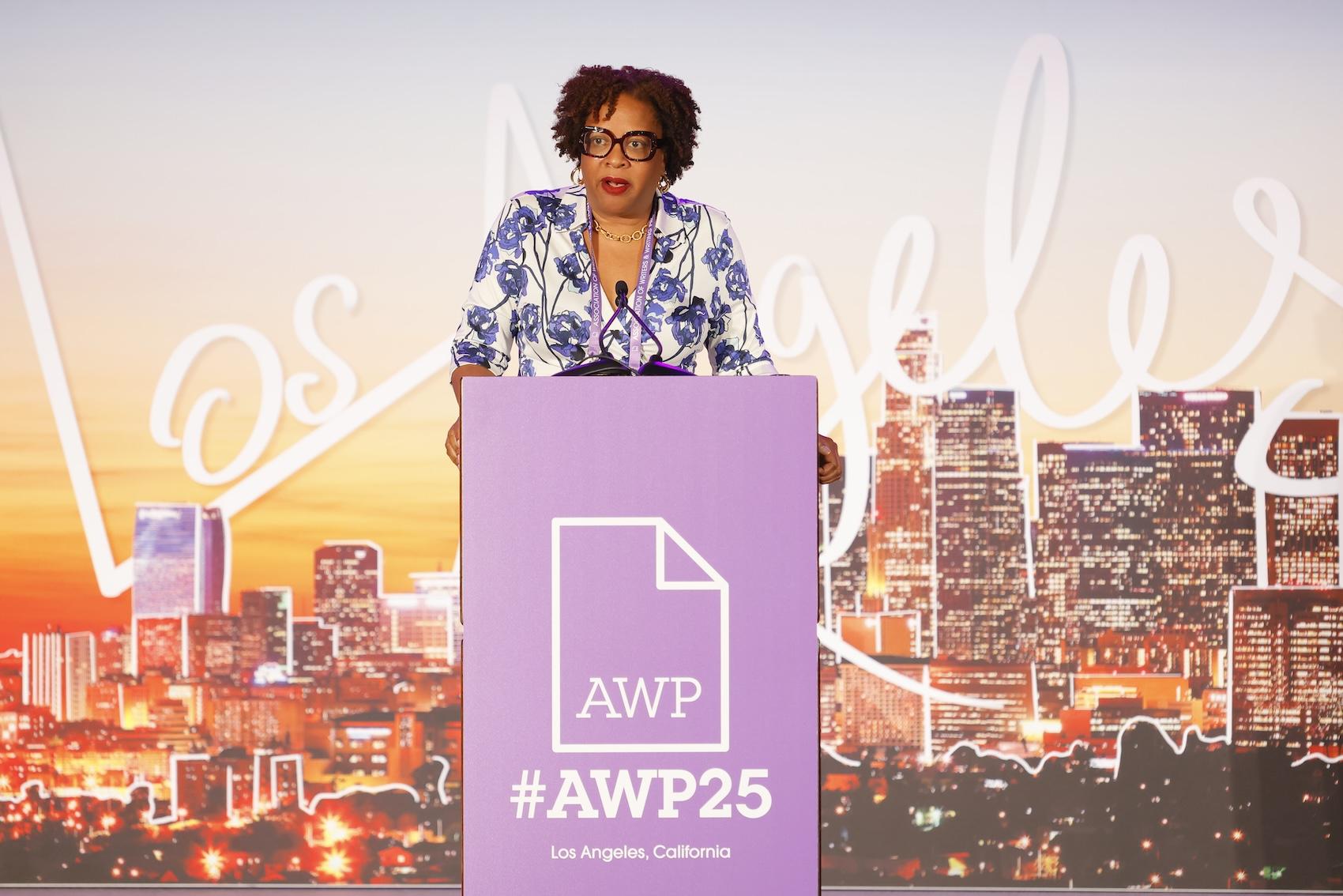
On the last day of the conference, I gave a lecture, “Black Words Are Black Wealth.” The title is a nod to my late friend and mentor, Nikki Giovanni, who passed away in December. The thrust of my remarks is that our writing is valuable not for the awards we may win, not the advances we may command, but for the light we shine upon the culture. By this I mean the injustices we expose as well as the beauty that we elevate. Our words sometimes pose complicated questions, and just as often they provide the answers for which we have been aching. This is our generational wealth.
In the context of our American past and American present, we have come to understand that all our words have this power and significance. In this moment, let us all converge in the way of our HBCU fellows. Let us fortify ourselves, our culture, and our democracy with our sacred alliance of writers, doing the work one brave word at a time.
Faculty Fellows
b crowell
Clark Atlanta University
There’s a distinct feeling when two or more HBCU folks are gathered—something similar to seeing your likeness in the face of a relative and knowing that even with your distinct names and stories, you’re connected to the same legacy and purpose. In the midst of what could have been an overwhelming conference experience (especially for a first-time attendee like me), the AWP HBCU Fellowship Program facilitated a space for kinship and meaningful exchange.
The welcome luncheon was a wonderful and intimate opportunity for our cohort to become acquainted with our peer fellows, mentees, and advisors. I appreciated the warmth and care Tayari Jones and [AWP board member] Regina Brooks showed to each of us, especially the students. I particularly enjoyed when each student fellow was encouraged to share a bit about their career and writing goals. I was inspired and fascinated by the breadth and diversity of their interests ranging from horror, to creative nonfiction, to blends of different forms spawning new genres of their own.
Participating in the HBCU MFA Think Tank directly aligned with my goal of developing a clear plan for a future program within my department. The experience of strategizing how to elevate and preserve Black voices within the web of our institutions with other educators and integral writing professionals was empowering. While HBCUs have always held a surplus of talent in terms of content and craft, the think tank specifically highlighted the need to build programs that will equip students with the tools to extend their professional reach. In addition to emphasizing skills such as obtaining an agent or publisher, the session also stressed the importance of providing opportunities for students interested in interdisciplinary fields of writing, as well as other professional trajectories within the industry that can further leverage Black voices and narratives. The significance of what we were working toward felt palpable, and I’m honored to have been present to contribute during this stage of the process.
Tayari Jones’s presentation “Black Words Are Black Wealth” was a compelling reminder of our literary inheritance, of how “once [we] learn to write, [we] will forever be freeing others.” It caused me to reflect on who I hope to free (or have freed) through my writing, as well as the importance of “maintaining this freedom” through the development of creative writing programs within our respective institutions. Her challenge to “make a record of what we’re going through right now” as a “service to ourselves” even further confirms the need for more programs within safe and curated cultural spaces at this pivotal time.
Most of all, I value the program’s emphasis on mentorship. My teaching philosophy and praxis are firmly grounded in relationship building; therefore, I’m excited and invested in extending our writing communities together across our respective institutions. Along with reading some of Ja’Nya’s wonderful work, as well as learning about her research goals and background as founder of her campus’s poetry club, we have since established a commitment to check in at least once a month and exchange writing.
I am grateful for this time of synergy and support fostered by the AWP HBCU Fellowship Program. I left feeling inspired by new facets of purpose and eager to share strategies for future and lasting creative writing development.
Isaac Hughes Green
North Carolina Central University
This year was my second time attending the AWP Conference after my first in 2020, when I met the editor that published my first short story. The story started my career as a writer and eventually professor. I had high hopes for my time in LA and wasn’t disappointed.
I met my mentees, John and Veronica, who were just as wide-eyed as I’d been the first time I attended as a student. Tayari Jones arrived next. I was struck by how approachable she was given how many books she’s sold and awards she’s won. Next was the bookfair, where I introduced myself to a few editors I’d submitted things to. My first time in the bookfair in 2020, it felt like a foreign world, but this time around, I was happy to see a few familiar faces.
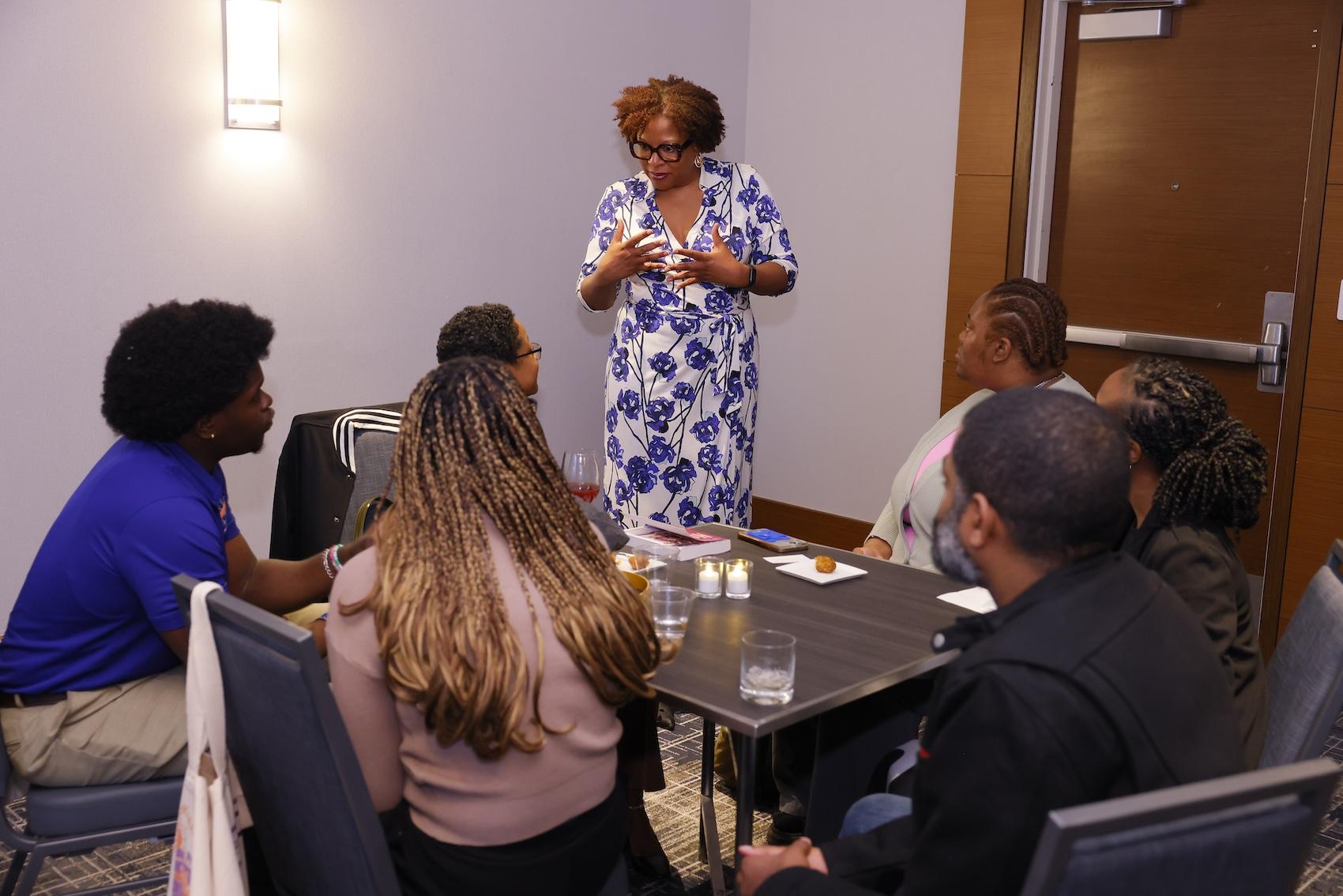
I then met up with the HBCU fellows for a luncheon with Autumn from AWP and Regina Brooks from Serendipity Literary Agency. This is where I got to see the young minds of the HBCU students at work. They shared their feelings on everything from the place of HBCUs in academia to the current political administration and ways to persevere despite it. I was trying to get a word in, but they were so eloquent. I realized I might have been the only person in the fellowship cohort that hadn’t attended an HBCU. I mentioned that, even though the students are at HBCUs, they might find themselves in predominantly white spaces and that if they encountered frustrating scenarios there, they shouldn’t be discouraged but should instead take it as fodder for their creative work. While being a professor at my HBCU has provided space for me to have conversations about race, gender, sexuality, and other nuanced topics I wouldn’t be able to have anywhere else, I still come from Hope Valley, a white neighborhood, and went to NYU, a PWI, for undergrad. I hope my words carried, because I believe in what I said. But it would become apparent how touched I was by my upbringing in the coming days.
The next day, the HBCU MFA Think Tank happened. I met a colleague and a couple dozen other academics for a conversation around something I’ve been excited about for a while. My MFA changed my life. I know having one at an HBCU would do the same for many other Black writers. The conversation was productive. Tayari’s lecture the next day was inspirational for someone like me who is in the processing of publishing a book. She said she’d had to hang on and believe in herself, even when things looked dark or unfair. And I realized I’d have to do the same. The fellowship program reception happened that night, and I felt affirmed by hearing my name announced from the podium and meeting so many people who were excited to have me there.
On Saturday I visited the Santa Monica pier and saw a Latino break-dancing group. They were impressive, some Olympians, who twisted and spun on their heads and hands. And then they asked me and couple of other people to join them. I thought they’d jump over me or something, but they taught us some choreography and then asked us to freestyle in front of eighty to one hundred people. I did the heel toe. And even though they’d said I had rhythm before, the MC shouted out that “for a brother, that was a white dance move.” I laughed it off and even donated to their fund. But at the end of the day I was left wondering, Are my dance moves white? Am I Black enough?
I bought dinner for my mentees that night at Fixins in LA LIVE. They eagerly took the copies of Anne Lamott’s Bird by Bird that I gave them, and we talked about writing and how they could carve a path forward. Seeing their eager faces cemented my connection to my community. Black is not about what someone thinks of your dance moves. It’s not about where you grew up. It’s about being in community and building on our collaborative strengths. That was the last thing I did at AWP with my mentees, and it’s what I plan to continue going forward.
Is the heel toe a Black dance move? Questionable. But does sharing knowledge at AWP and at my HBCU with young Black students make me Black enough that it doesn’t matter? Absolutely. Thanks for the opportunity to do so, AWP!
Ebony Lumumba
Jackson State University
A Black writer can get lost at AWP. I wondered if the thousands of other thinkers and world-builders pouring into the Los Angeles Convention Center also scoured the crowds for someone to lock eyes with, nod at and feel a little safer—more a part. If I was the only one scanning the sea of scribes searching for a place to be. To belong.
Then I saw them. Beautiful Black and Brown faces. Huddled on couches in a corner. Unsure like me. My group. From the moment I connected with the other participants in the AWP HBCU and Tribal Colleges & Universities Fellowship Programs, I found home. Connecting with the students and colleagues selected for this niche opportunity made AWP seem smaller. More accessible. We were there representing ancestors. Those who’d always been on this soil and those who’d built this country up from the dust.
My mentees were beautiful. We immediately picked out sessions in the program that sounded like places we wanted to be and decided on a panel dedicated to Octavia Butler. Yeah, I was home.
Tayari Jones blended with us like we were hers and, as we waited on our badges to be printed, we talked about the legacies of Margaret Walker, Pearl Cleage, Toni Cade Bambara, and the HBCUs that hold them tight. Little did I know our big, small talk included spoilers to the brilliant keynote she would deliver the next morning.
Lunch with Tayari and Regina Brooks felt less like part of the schedule and more like a meal with family. With those kinfolk so inherently proud of you that nothing can convince you that you won’t be exactly what they tell you that you already are. The conversation ranged from Beyoncé and craft to HBCU creative writing programs and the magical network of HBCU alumni that ensure we all have the access we’ve been historically denied. It was family.
The HBCU MFA Think Tank furthered the feeling that we gone be alright. My only regret is that my student mentees were not present to witness the Black brain trust of writers, professors, administrators, and laureates all sitting around dreaming about the careers of students we didn’t even have yet and vowing they would never go through the gauntlets we’d all experienced. I wished they’d been there to see how much we love who they are now and who they will become. They needed to see it.
Tayari’s keynote reminded us that “writing has always been part of our freedom practice,” and we swelled with purpose at being charged to be “forever freeing others” with our words. My mentees and I carved out a moment for ourselves and sipped overpriced lattes in the coffee shop while talking about the worlds we’re writing. I left that little impromptu meeting ready to show up for them forever. Already planning ways to get them to my university. To Jackson. To Mississippi. To the South. To find home and write more words to free us all.
Student Fellows
Corinne Fuller
Spelman College
When I first sat down to reflect on my time at the 2025 AWP Conference as an HBCU fellow, I expected the words to pour out of me, tied in a neat bow. Instead, I stared at a blank screen for longer than I’d like to admit. In just a week, I had so many new experiences and met the most wonderful colleagues and mentors that I couldn’t even fathom where to begin. Eventually, I remembered that I was a writer, something the conference also affirmed within me, and ordered my thoughts.
Though I’ve been writing all my life, I had never had the privilege of attending a conference. So, this was one of the most inspiring literary moments of my life. I left the conference with a full heart—and not just because I bought more books than I could carry alone—but because I was in a space where the love of words and storytelling was the norm, not the exception.
I was so moved being surrounded by people who love writing, reading, and storytelling as much as I do. But being mentored by those who once stood where I stand now—as HBCU alumni—stirred something even deeper. Seeing their confidence, success, and humility felt like taking a glimpse into the future of who I hope to become. Their presence affirmed that there is space for me in this industry, and their guidance reminded me that my voice matters.
The mentorship the fellowship provided also helped me see myself in the panel speakers. I could see myself speaking to an audience about my own writing in the future and what it means on a broader scale. Those sessions were incredibly diverse and thought-provoking. I especially enjoyed the panel on Octavia Butler, whose work continues to influence my writing. But the panel discussion on the importance of the convergence of religion and sexuality in writing was equally invigorating and refreshing, among all the others I attended.
It was truly a full-circle moment to have the chance to hear from some writers that I have long admired—and, of course, to be a fellow for a staple writing conference and organization. I am so excited for other HBCU writers to get to experience all that I did, so they too can realize they have a space in the writing world—a space that is only growing larger due to efforts like AWP’s HBCU Fellowship Program!
Ja’Nya Henderson
Elizabeth City State University
Attending the AWP Conference as an HBCU 2025 fellow was the best experience I have ever had as a writer, Black lesbian, activist, and human being. As a writer who attends a small HBCU, I never thought there would be dedicated spaces for writers, people who appreciate different creative forms, and everything in between. Usually, in big spaces like a conference, you would feel overstimulated in crowded spaces. On the other hand, whenever I walked around and made eye contact with strangers, it felt like the safest place to be. Whenever a stranger looked at me or engaged in a conversation, I felt this itching urge to write about these experiences and feelings, as if it was my first time interacting with others. Before this conference, I didn’t write as much because writing meant dealing with the truth, and at the time, I couldn’t handle my writing. But, just like breathing, my writing was inevitable. During this conference, every day, I wrote something, whether from a panel discussion, journaling interactions, conversations, or simply just ranting about how amazing it was to see Roxane Gay in person. For the first time, I was writing about the truth every day. The truth is I am a writer. An amazing writer at that. I had felt this in the front of my mind, breathing, and writing. Applying for the #AWP25 HBCU Fellowship and attending the #AWP25 Conference allowed me to breathe in my writing, which is my living. The #AWP25 Conference filled me with Black magic, endless essays, and poems, and most importantly, I got to breathe the same air as Roxane Gay, an experience I will hold indefinitely!
Veronica Holmes
Fisk University
I started writing at a very young age. As a little girl, I carried a notebook with me everywhere I went. I was always itching to tell a story because writing was my way of understanding the world and its peoples. I discovered pieces of myself in every written story, and I found joy in the rough drafts and finished products. So, being selected as one of five students for the AWP HBCU Fellowship Program feels like a celebration of the many years I have spent discovering my voice and amplifying others. It’s an acknowledgment that someone sees me and hears me, and it’s the perfect reminder to keep reading and writing this world. As a student fellow, I have learned so much valuable information and forged relationships with so many brilliant thinkers and writers. I am immensely grateful for this one-of-a-kind opportunity, and this year’s AWP Conference in Los Angeles, California, inspired me to continue believing in the power of writing and storytelling.
Here are my three takeaways: (1) There is meaning in everything. So, write about it—and write about it now. If you don’t, who will? (2) Never be afraid to speak truth to power. Finally, (3) acknowledge and recognize those who have gone before us and are paving the way for us to speak truth to power.
As I aim to leave my mark on this world, I will forever cherish these words from the incomparable Tayari Jones (courtesy of Ms. Nikki Giovanni): “Black words are Black wealth.” I am encouraged to know that my words have authority. My words are freeing. My words shall live.
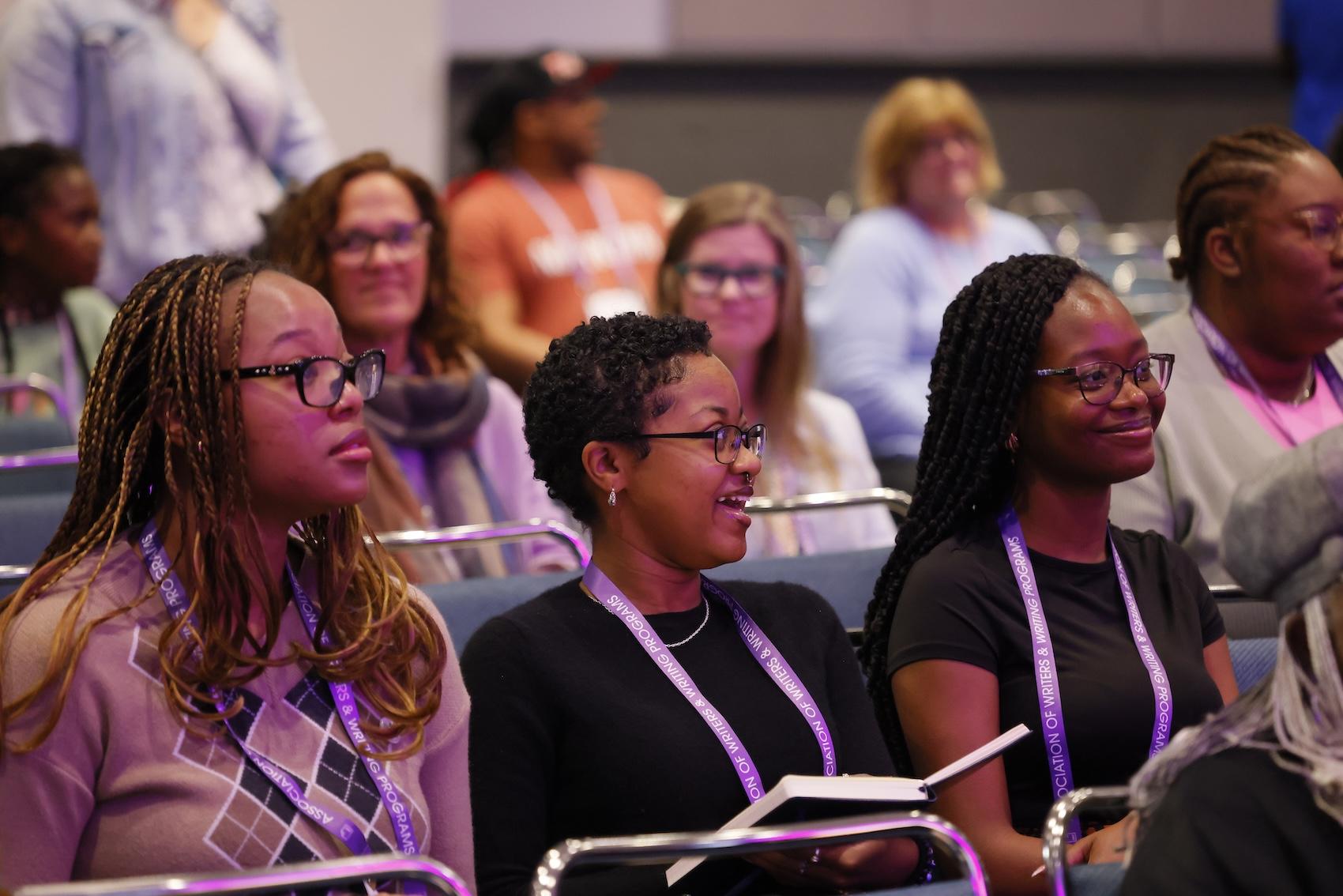
Kamryn Hughes
Texas Southern University
The 2025 AWP Conference & Bookfair was an incredible career-changing experience for me. I am still honored to be one of the HBCU fellows that was selected for this phenomenal program. Meeting so many people who were both aspiring authors like I am, but also tenured and experienced writers, was both relieving and overwhelming. It was great to see and meet so many people who were just like me, but it was also intimidating to see just how many writers, books, and the level of competition there truly is out there. I learned that writing is more than just a skill and craft that needs to be practiced, but an entire community. An industry that is going to be exciting and difficult to navigate.
Another important thing I gained from this program, outside of an eye-opening experience, was a great new mentor. Ebony Lumumba has taken me and Corinne Fuller, a fellow writer who was a part of the program, under her wing, and she has inspired me to write the stories I want to write. She also introduced me to opportunities to be in community with other Black authors. I admire her and how she encourages young writers to be bold and creative.
I heard many great panels, such as “Long Live Octavia Butler” and “Holy F**k: Women, Faith & Sex in Fiction.” I heard many things I needed to hear that imbued me with the confidence to begin writing more seriously. However, my favorite part of the conference was Roxane Gay’s keynote address. Her feelings and experiences as a writer resonated with me, and it was reassuring to know that she and many other writers felt the same way at the beginning of their careers. The trajectory of her writing career was not only inspiring to hear, but gave me a somewhat realistic perspective on the ups and downs creative writers go through.
Most importantly, I came out of AWP inspired to write, create, and hone my craft. I came out wanting to test the boundaries of my creativity. I came out less scared to make my creative ideas exist and more hopeful about the impact my work can leave on others. Realizing that striving for perfection is often detrimental to the writing process is an important one, and I am deeply grateful that this experience made me see that sooner rather than later.
John S. Poitier Jr.
Virginia State University
Self-acceptance is the seed of destinic recognition. External praise may warm the skin, but true growth blooms in solitude, in the quiet spaces where we meet our minds and make peace with our purpose. This truth defined my time at the AWP Conference & Bookfair.
Under the guidance of Tayari Jones, brilliant author of An American Marriage, and the steady mentorship of Isaac Hughes Green, I found myself suspended between cloud nine and celestial ascent. In the heart of Los Angeles, the City of Angels and ever-surging Uber fares, I was one of five student fellows nationwide, and the only male.
Still, there was no pressure to outperform. Just presence. Just poetry. Every hallway held possibility: open journals, open conversations, panels honoring the sacred work of Octavia Butler and others who bend language into liberation. I walked among worlds—those written, spoken, and dreamed.
And then . . . Angela.
Angela Bassett, luminous and legendary, filming 9-1-1 not far from where I stood. To see an artist embodied in her craft, as I had been those four days, was divine affirmation. Her presence crowned an already unforgettable journey.
I returned home echoing the paraphrased words of Ms. Jones: “Black words are Black wealth.” My internal vault was not only stirred, but sanctified. To those holding pens and possibility: Never let the world convince you to quiet your voice. Your words are currency. Your truth is treasure.
You are everything.